
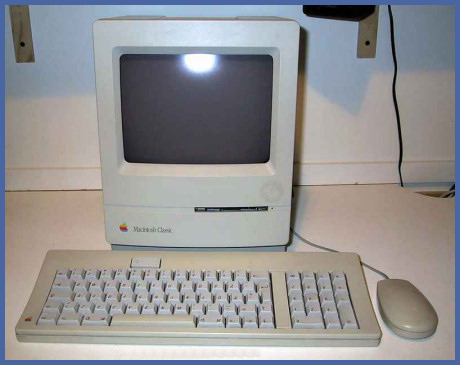
Apple Macintosh Classic
I have three main units, three keyboards and three mise.
type computer
country USA
year 1990
os Mac os
cpu Motorola mc 68000
speed 8 MHz
ram 1 MB
rom 512 KB
disk 3,5″ 1,44 MB
hd 40 MB
graphic 9″ 512 x 342
colors mono
sound 8 bit mono
ports ADB (2), mini-DIN RS-422 (2), DB-25 SCSI, 3,5 mm audio out
The Apple Macintosh Classic — The Affordable Compact Mac
Released in October 1990, the Macintosh Classic was Apple’s most affordable Macintosh at the time of its launch — priced at $999, it was the first Mac to break the $1,000 barrier and make the Macintosh genuinely accessible to students and budget-conscious users. Combining the beloved compact form factor with a 8 MHz Motorola 68000 processor and 1 MB of RAM, the Classic offered entry into the growing Macintosh software ecosystem at a price that had previously seemed impossible for an Apple product.
The $999 Mac
Apple’s ability to sell a complete Macintosh for $999 in 1990 was the result of years of manufacturing improvements, component cost reductions, and engineering refinements. The Classic used many of the same components as the Mac Plus but in a more efficiently manufactured package. The lower price opened Mac ownership to a much wider audience — particularly students and educational institutions that had been priced out of earlier models.
ROM Disk — An Emergency Trick
One of the Classic’s most unusual features was a hidden ROM disk containing a stripped-down version of System 6.0.3 — accessible by holding down Command-Option-X-O during startup. This allowed the Classic to boot from ROM without a floppy disk, providing an emergency recovery option when the startup disk was unavailable or corrupted. It was a clever engineering solution that reflected Apple’s attention to user experience even in emergency scenarios — a small but thoughtful detail that distinguished Apple’s approach to product design.
Legacy
The Macintosh Classic remained in production until September 1992, selling in significant numbers to the education and home markets. It was succeeded by the Macintosh Classic II, which upgraded the processor to the 68030. Together, the Classic models represent the democratisation of Mac ownership — the point at which Apple’s premium computer became genuinely affordable for ordinary users.