
The Rarest and Most Historically Significant Items in the Collection
Among the 1,134 machines in Computer Museum Ata — Finland’s largest private retro computer collection — a number stand out for their exceptional rarity, historical significance, or unique place in computing history. This page documents the most remarkable pieces, each representing a moment when technology took an unexpected turn, a product that failed commercially but succeeded historically, or a surviving example of hardware so rare that finding one in working condition is genuinely extraordinary.
Telmac TMC-600 — Finland’s Only Home Computer (1982)

The Telmac TMC-600, produced in 1982, was Finland’s only domestically designed and manufactured BASIC home computer. With fewer than 600 units ever produced, it is one of the rarest surviving home computers in the world. That a Finnish company designed and built an original home computer in 1982 — competing in the same market as Sinclair, Commodore, and Atari — is a remarkable achievement that is largely unknown outside Finnish computing history circles. The collection holds both the TMC-600 and the TMC-600AS variant.
Telmac 1800 — Finland’s First Computer, Unassembled (1977)

The Telmac 1800, produced by Telercas Oy in 1977, was Finland’s first computer kit and one of the earliest microcomputer kits available anywhere in the world. Using the RCA 1802 COSMAC processor — the same chip simultaneously being used in NASA’s Voyager space probes — approximately 2,000 kits were sold to Finnish electronics enthusiasts. In 1979, programmer Raimo Suonio developed Chesmac on a Telmac 1800, creating one of the world’s first commercial video games and Finland’s first.
This collection holds a particularly extraordinary example: an unassembled Telmac 1800 kit — all components present, the PCB unsoldered, exactly as it left the Telercas factory in 1977. Given that the Telmac 1800 was sold as a kit that buyers were expected to assemble themselves, a surviving unbuilt example is extraordinarily rare. Virtually every kit sold was assembled by its purchaser decades ago, making an unbuilt Telmac 1800 one of the most unusual Finnish computing artefacts in existence — a time capsule from the very dawn of Finnish computing, never touched by a soldering iron.
Itumic Salkkumikro M6800 — Finland’s First Portable Computer (1978)

The Itumic Salkkumikro M6800, developed in Finland in the late 1970s, was a briefcase computer built around the Motorola 6800 processor — one of the earliest portable computing devices produced anywhere in the world, and Finland’s first. The ”Salkkumikro” name translates directly as ”briefcase microcomputer,” describing both its form factor and its intended use: a portable computing solution for Finnish technical professionals who needed computational capability in the field before the concept of the laptop computer existed. The Salkkumikro predates the Osborne 1 (1981) — widely considered the first commercially successful portable computer — by several years, and its existence demonstrates that Finnish engineering ingenuity in portable computing paralleled international developments rather than following them. In a collection celebrated for its Finnish computing heritage, the Itumic Salkkumikro represents a direct physical link to the earliest chapter of Finland’s computing story.
Magnavox Odyssey Run One — The World’s First Home Video Game Console (1972)

The Magnavox Odyssey, released in September 1972, was the world’s first home video game console — predating Atari’s Pong arcade machine by several months and every subsequent home gaming system by years. Designed by Ralph Baer, the ”father of video games,” the Odyssey used analogue circuitry with no microprocessor — the technology simply did not yet exist — to generate moving dots on a television screen. Games were distinguished from one another by plastic overlays placed over the TV screen, and the console came with cards, dice, and playing pieces as physical accessories, reflecting its origins as an electronic board game hybrid. Magnavox sold approximately 300,000 Odyssey units between 1972 and 1975, an extraordinary commercial achievement for a product category that had never existed before. The ”Run One” designation refers to the first production run of the console. A working first-run Magnavox Odyssey is one of the most historically significant pieces of gaming hardware that can be held in a private collection — the device from which all home gaming descends.
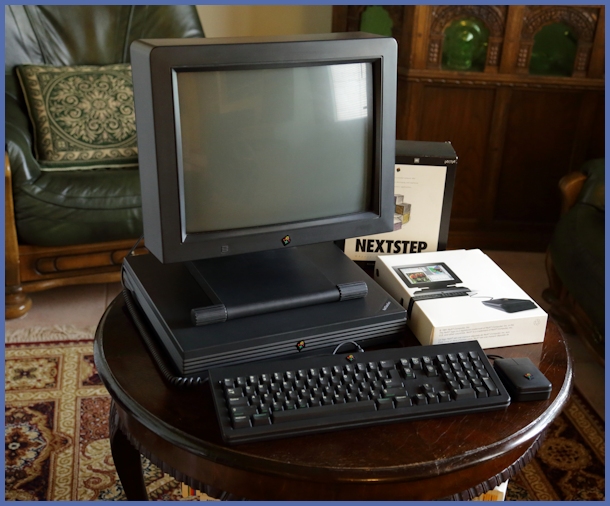
NeXT NeXTstation — The Computer That Invented the Web (1990)
The NeXT NeXTstation was produced by Steve Jobs’ NeXT Computer company after his departure from Apple in 1985. In 1991, Tim Berners-Lee used a NeXTstation at CERN in Geneva to develop the first web server (httpd) and the first web browser (WorldWideWeb), inventing the World Wide Web. The NeXTstation’s object-oriented development environment, Display PostScript interface, and powerful UNIX foundation made it the ideal platform for Berners-Lee’s groundbreaking work. Every website that has ever existed traces its origin to software written on a NeXTstation. Steve Jobs later sold NeXT to Apple, and the NeXT operating system became the foundation of Mac OS X.
Processor Technology Sol-20 — Pioneer Personal Computer (1976)

The Processor Technology Sol-20, produced from 1976 to 1977, was one of the earliest commercially available personal computers — a complete, pre-assembled S-100 bus computer produced from a kit design featured in Popular Electronics magazine. Designed by Lee Felsenstein, the Sol-20 predated the Apple II and TRS-80, and its built-in keyboard and professional appearance were genuinely innovative for 1976. Fewer than 10,000 were ever produced, and working examples with original documentation are extraordinarily rare. This collection’s example, acquired in 2024, is one of very few known to exist in Finland.
Altos 586-10 — Multi-User Unix Workstation (1982)
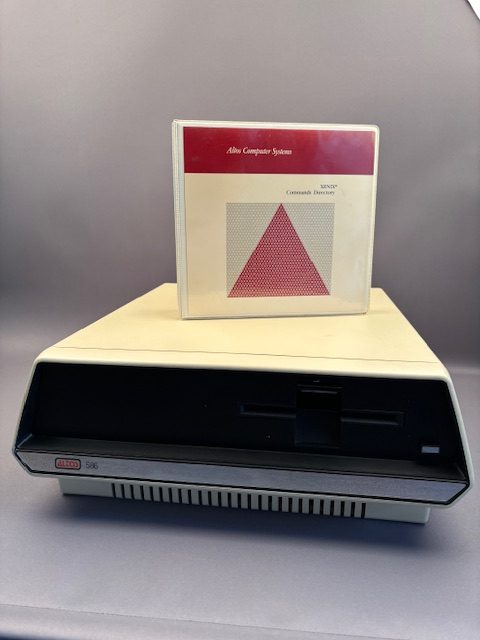
The Altos 586-10, produced by Altos Computer Systems of San Jose, California in 1982, was a professional multi-user Unix workstation capable of supporting up to eight simultaneous users through serial terminals — a remarkable capability at a time when most personal computers served a single user. Using an Intel 8086 processor with a 10 MB hard disk and running Xenix (Microsoft’s Unix variant) or CP/M-86, the Altos 586 was targeted at small businesses and professional environments that needed the power of a minicomputer at a fraction of the cost. Altos was one of the pioneering companies in the multi-user microcomputer market, and the 586 series represented the state of professional computing in the early 1980s — years before networking made shared computing resources universally accessible. Surviving Altos systems in working condition are today extremely rare, and the 586-10 represents an important and often overlooked chapter in the history of business computing.
Hewlett-Packard HP-85 — The All-in-One Scientific Computer (1980)

The Hewlett-Packard HP-85, released in January 1980, was one of the most remarkable personal computers of its era — a completely self-contained scientific computing system that integrated a CRT display, thermal printer, tape drive, and BASIC interpreter into a single portable unit. Designed specifically for scientists, engineers, and technical professionals, the HP-85 used a custom HP processor running at 0.625 MHz with 16 KB of RAM and offered a range of optional ROM modules that added advanced mathematical, statistical, and instrument control functions. HP’s reputation for engineering excellence made the HP-85 the tool of choice in laboratories and research institutions worldwide, and its built-in IEEE-488 interface allowed it to control laboratory instruments directly. The HP-85’s combination of portability, self-containment, and professional capability made it genuinely revolutionary in 1980 — a professional scientific workstation that could sit on a desk or be carried to a laboratory without requiring a separate monitor, printer, or storage device.
Xerox 820-II — CP/M Workstation from the Inventor of the GUI (1982)

The Xerox 820-II, released in 1982, was a professional CP/M workstation from Xerox — the company whose Palo Alto Research Center (PARC) had already invented the graphical user interface, the mouse, Ethernet networking, and laser printing, technologies that would define computing for the following four decades. The 820-II used a Zilog Z80A processor at 4 MHz running the CP/M operating system, targeting the professional business market with a complete workstation solution including monitor and disk drives. While the 820-II itself was a conventional CP/M machine rather than a showcase for PARC’s innovations, Xerox’s role in computing history is without parallel: virtually every element of the modern computing interface — windows, icons, menus, pointers, the mouse — was invented at PARC and demonstrated on Xerox’s Alto and Star systems before Apple and Microsoft brought these concepts to mass market products. A Xerox computer in a collection is a direct connection to the laboratory where the visual language of computing was invented.
Kontron Zilog Z80-KIT — Microprocessor Training System (1978)

The Kontron Zilog Z80-KIT was a professional microprocessor training and development system built around the Zilog Z80 — one of the most historically significant processors ever made. Designed by Federico Faggin (who had previously designed the Intel 4004 and 8080), the Z80 was introduced in 1976 and went on to power an extraordinary range of computing products: the Sinclair ZX80, ZX81, and ZX Spectrum; the Amstrad CPC; the MSX standard; the Sega Master System and Game Gear; the Nintendo Game Boy; TRS-80 computers; and countless industrial and embedded applications. Kontron, a German embedded computing company, produced training systems like the Z80-KIT to allow engineers and students to learn microprocessor programming and hardware interfacing at the hardware level — a hexadecimal keypad and LED display making the processor’s internal operations directly visible. These professional training systems represent computing education at its most fundamental, and the Z80-KIT connects directly to the processor architecture that underpins a significant proportion of the home computers and game consoles represented elsewhere in this collection.
Apple Lisa 2 — Graphical Interface Pioneer (1984)

The Apple Lisa, introduced in January 1983, was one of the first personal computers to offer a graphical user interface and mouse to ordinary consumers — preceding the Macintosh by nearly a year. The Lisa 2, released in 1984, improved on the original with a lower price and enhanced storage. Despite its innovation, the Lisa was commercially unsuccessful due to its $9,995 price. In 1989, Apple buried approximately 2,700 unsold Lisa computers in a Utah landfill to claim a tax write-off, making surviving working examples genuinely scarce. The Lisa’s influence on the Macintosh, Windows, and every graphical interface since makes it one of the most historically important computers ever made.
Sinclair ZX80 — The £99 Computer (1980)

The Sinclair ZX80, launched in January 1980, was the first computer ever sold in the United Kingdom for under £100 — a price point that made personal computing accessible to ordinary British families for the first time. Using a Z80A processor at 3.25 MHz with just 1 KB of RAM and a membrane keyboard, the ZX80 was extraordinarily basic by any measure, but its price democratised computing in a way no previous machine had achieved. Clive Sinclair’s decision to sell the ZX80 as both a kit (£79.95) and assembled (£99.95) made it attainable for enthusiasts across the income spectrum. The ZX80 is considerably rarer than the ZX81 and ZX Spectrum that followed, and working examples in good condition are genuinely scarce collector’s pieces.
Sinclair ZX81 — Unassembled Kit Computer

The Sinclair ZX81, launched in March 1981 as the successor to the ZX80, was sold in two forms: a fully assembled version for £69.95 and a self-assembly kit for £49.95. The kit required the owner to solder all components onto the PCB — a task that most enthusiasts completed within a few hours and that introduced many British teenagers to electronics assembly for the first time. This collection holds a remarkable example: a ZX81 kit that was never assembled — all components present, the PCB unsoldered, exactly as it left the Sinclair factory over four decades ago. An unbuilt ZX81 kit is extraordinarily rare; virtually every kit sold was assembled by its purchaser, making unbuilt examples among the most unusual Sinclair artefacts in existence. The ZX81 sold over 1.5 million units and introduced computing to a generation of British enthusiasts who would go on to shape the UK technology industry.
Bandai Pippin @World — Apple’s Only Game Console (1996)

The Bandai Pippin, launched in 1996, was Apple’s only foray into the game console market — a CD-ROM based multimedia platform developed in collaboration with Japanese toy company Bandai. Based on the Power Macintosh architecture with a PowerPC 603e processor, the Pippin was positioned as both a game console and an internet appliance, years before internet connectivity became standard in consumer electronics. At $599 — far more than competing consoles — and with a library of fewer than 100 titles, the Pippin sold fewer than 100,000 units worldwide before being discontinued in 1998. Steve Jobs cancelled the project upon returning to Apple. Surviving complete examples are among the rarest Apple hardware ever produced.
Milton Bradley Vectrex — The Vector Graphics Console (1982)
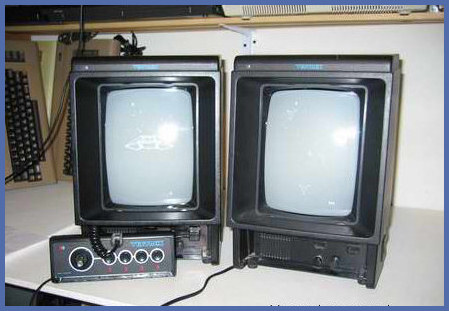
The Vectrex, produced by General Consumer Electronics (later Milton Bradley) from 1982 to 1984, is unique in gaming history as the only home game console ever to use vector graphics — producing crisp, geometric line-drawing images rather than the pixel-based raster graphics of every other console. Its built-in monitor eliminated television compatibility issues and produced a visual style unlike anything before or since. The Vectrex came with Minestorm (a Missile Command clone) built in, and its library of 28 official games included excellent arcade conversions and original titles, several supporting a unique overlay system that added colour to the monochrome display. Discontinued after just two years due to the 1983 video game crash, the Vectrex is today one of the most beloved and collectible consoles from gaming’s early era.
Commodore MAX Machine — The Forgotten Commodore (1982)

The Commodore MAX Machine, released in Japan in 1982 as the ”MAX Machine” (and briefly in some European markets as the ”Ultimax”), was a cut-down home computer that preceded the Commodore 64 — sharing the same SID sound chip and VIC-II graphics chip that made the C64 legendary, but with only 2.5 KB of RAM and no built-in BASIC interpreter, relying instead on game cartridges for all software. Designed as a low-cost gaming machine to compete with Japanese game consoles, it was a commercial failure that was discontinued after just a few months of sales. The MAX Machine is today one of the rarest Commodore products ever produced — far scarcer than the Commodore 64 that succeeded it — and its shared chipset with the C64 means that MAX cartridges are compatible with the more common machine. A working MAX Machine in good condition is an exceptional collector’s find.
Atari STacy 2 — Atari’s Rare Laptop (1989)

The Atari STacy, released in 1989, was Atari’s attempt to bring the ST platform to a laptop form factor — a full Motorola 68000-based computer with a built-in monochrome LCD display, trackball, and hard disk in a portable package. The STacy used the same TOS operating system and Motorola 68000 processor as the desktop ST series, offering full compatibility with the ST software library in a portable format that predated mainstream laptop computing. However, its weight (approximately 4.5 kg), limited battery life, and high price made it commercially unviable, and Atari sold fewer than 5,000 units worldwide before discontinuing it. The STacy 2 variant featured 2 MB of RAM. Today the Atari STacy is one of the rarest Atari computers ever produced — far scarcer than any desktop ST model — and working examples are extraordinarily difficult to find, making this collection’s example a genuinely exceptional piece of Atari hardware history.
Atari Falcon 030 — Atari’s Final Computer (1992)

The Atari Falcon 030, released in 1992, was Atari’s final and most technically ambitious computer — and one of the most underappreciated home computers ever made. Using a Motorola 68030 processor at 16 MHz alongside a dedicated Motorola 56001 Digital Signal Processor (DSP), the Falcon 030 offered multimedia capabilities that no competing computer at its price point could match. The DSP chip enabled real-time audio processing, making the Falcon 030 genuinely superior to contemporary PCs and Macs for music production and audio work. It also featured a 16-bit colour display, built-in SCSI, and the full Atari ST/TOS software library compatibility. Despite its technical excellence, Atari’s deteriorating financial position and poor marketing limited sales to approximately 12,000 units before Atari discontinued it in 1993. The Falcon 030 is today celebrated by retro computing enthusiasts as one of the great might-have-beens of computing history — a machine that deserved far better than its commercial fate.
Spectravideo SVI SV-640FH — The MSX Ancestor (1983)
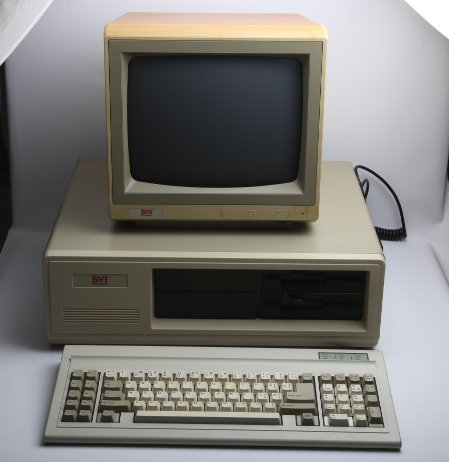
The Spectravideo SVI SV-640FH was the flagship model of the Spectravideo home computer range — and Spectravideo holds a unique place in computing history as the company whose architecture directly inspired the creation of the MSX standard. When Microsoft and ASCII Corporation developed the MSX specification in 1983, they based it substantially on the Spectravideo SV-318 and SV-328 design, meaning that every MSX computer ever produced — from Sony, Panasonic, Philips, Yamaha, and dozens of other manufacturers — traces its fundamental architecture to Spectravideo. The SV-640FH, with its enhanced memory and built-in disk interface, represented the Spectravideo line at its most capable. For this collection, Spectravideo has particular personal significance: the SV-328 was curator Ari Tommiska’s first computer in 1983, the machine that began the lifelong passion for computing that eventually produced Finland’s largest private retro computer collection. The Spectravideo computers on display here are not merely historical artefacts — they are the direct ancestors of the MSX platform and the personal starting point of this entire collection.
Sega Genesis Nomad — Full Console in Your Pocket (1995)

The Sega Genesis Nomad, released in North America in October 1995, was a technically remarkable device — a fully portable version of the Genesis home console that played the exact same cartridges as the home system on a built-in 3.25-inch colour LCD screen. Unlike the Game Gear which had its own distinct software library, the Nomad gave players access to the entire Genesis library of over 900 games in a portable format. It also included a TV output for home use and a second controller port for multiplayer. Released as Sega was transitioning to the Saturn, the Nomad arrived too late and at too high a price ($180) to achieve commercial success, and was sold only in North America. Today it is among the most sought-after Sega collector’s pieces.
Nintendo Virtual Boy — Gaming’s Most Ambitious Failure (1995)

The Nintendo Virtual Boy, released in July 1995, was one of gaming’s most ambitious and most thoroughly unsuccessful products — a tabletop stereoscopic 3D gaming system that used dual red LED arrays to produce genuine depth perception through a binocular eyepiece. Designed by Gunpei Yokoi — the genius behind the Game Boy — the Virtual Boy produced true 3D imagery years before 3D gaming became mainstream, but its red-only display, uncomfortable playing position, concerns about eye strain, and $179 price led to devastating reviews and sales. Nintendo discontinued it after just 22 official games and fewer than 800,000 units sold — the worst-selling Nintendo console ever. Today the Virtual Boy is among the most collectible Nintendo hardware precisely because of its failure: rare, unique, and representing Nintendo at its most ambitiously experimental.
Multitech Micro-Professor MPF-II — The Teaching Computer (1981)
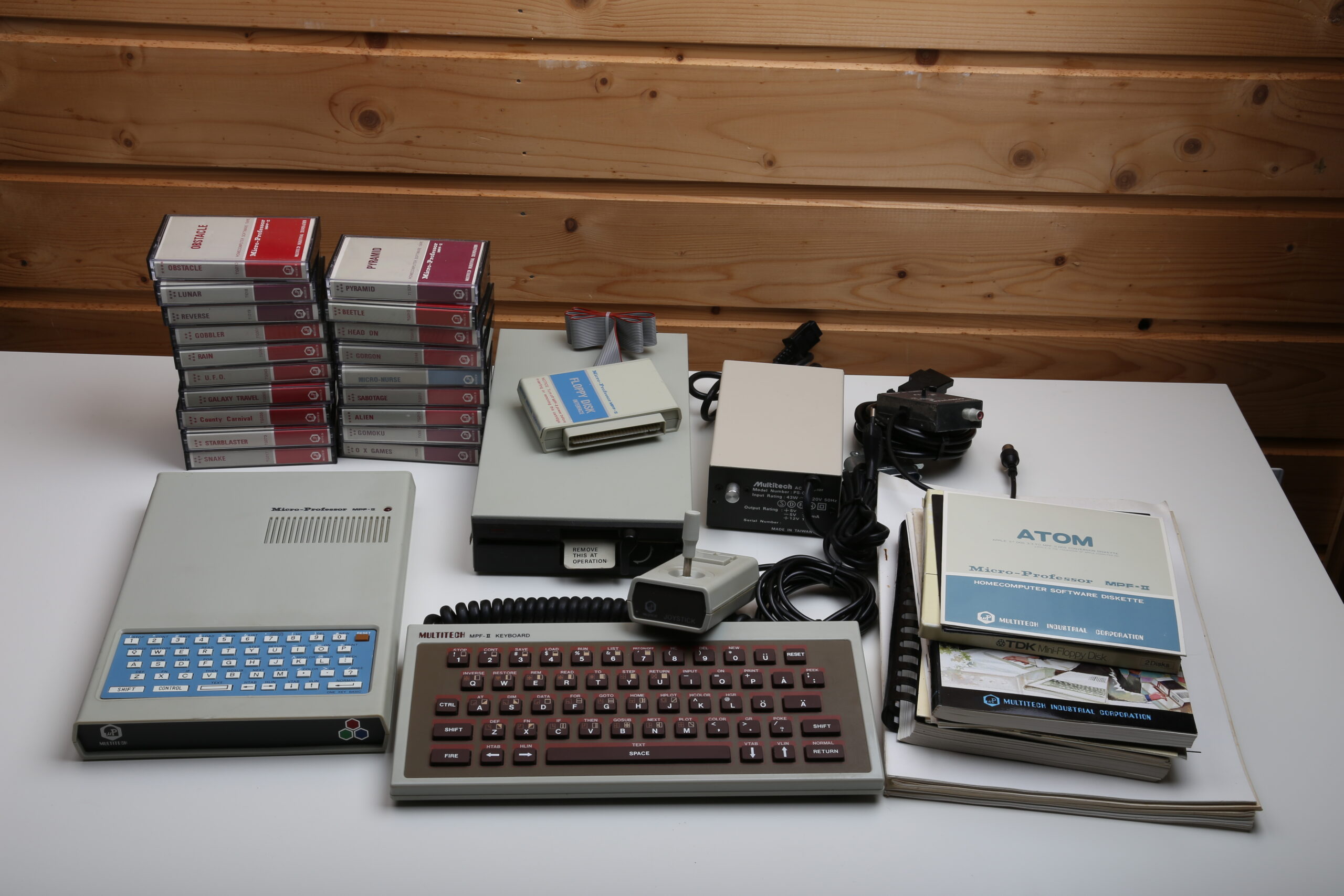
The Multitech Micro-Professor MPF series, produced by Multitech Industrial Corporation (later Acer) of Taiwan, was one of the most widely used educational computer systems in the world during the 1980s — found in university computer science departments, technical colleges, and engineering schools across Europe, North America, and Asia. The MPF systems were designed specifically to teach microprocessor programming and hardware fundamentals, with a hexadecimal keypad, LED display, and full access to the processor’s registers making the learning of assembly language programming directly visible. This collection’s MPF-II arrived in 2022 with its keyboard, floppy disk interface, disk drive, joystick, 19 games, and 8 manuals — one of the most complete Micro-Professor systems known to exist in a private collection.
Bandai WonderSwan — Gunpei Yokoi’s Final Console (1999)

The Bandai WonderSwan, launched in Japan in March 1999, was the final console project of Gunpei Yokoi — the Nintendo engineer who created the Game Boy, the D-pad, and the Virtual Boy — before his tragic death in a traffic accident in October 1997. Yokoi founded Koto Laboratory after leaving Nintendo and designed the WonderSwan for Bandai, creating a remarkably efficient handheld that ran on a single AA battery for approximately 30 hours. Sold only in Japan, the WonderSwan and its colour successor achieved approximately 20% of the Japanese handheld market against Nintendo’s Game Boy Color — a remarkable commercial achievement for a challenger to Nintendo’s dominance. Its library of Final Fantasy remakes, Gundam games, and Japanese RPGs make it culturally significant beyond its commercial success.
This collection continues to grow — each year bringing new acquisitions that add further depth to the historical record preserved here. The items documented on this page represent computing history at its most consequential: machines that changed the world, products that failed magnificently, and hardware so rare that finding a working example anywhere is cause for genuine celebration among collectors and historians alike.