
The Finnish Retro Games — Made in Finland
Finland’s video game heritage stretches back further than most people realise — to 1979, when a chess program written on a Telmac 1800 computer became one of the world’s first commercial video games. From that modest beginning, Finland developed a game development culture that would eventually produce some of the most celebrated games and studios in the world. This is the story of Finnish gaming from its earliest origins to the global industry it has become — and of the retro hardware and software that preserve its history.
The Beginning — Chesmac (1979)

Chesmac, developed by Raimo Suonio in 1979 on a Telmac 1800 kit computer, holds a remarkable distinction: it was Finland’s first commercial video game and one of the first in the world. Sold on cassette tape for the Telmac 1800, Chesmac demonstrated that Finnish programmers were participating in the earliest commercial games market — years before Rovio, Remedy, or Supercell existed, and before most Finns owned a personal computer. The Telmac 1800 on which Chesmac was developed is preserved in this collection.
The significance of Chesmac extends beyond its commercial status. That a Finnish developer created a commercially sold chess program in 1979 — the same year that companies like Atari were just beginning to establish the home gaming market — places Finland at the very origin point of video game history. Chess programs were among the most technically demanding games of the era, requiring genuine artificial intelligence to provide meaningful opposition, and Suonio’s achievement on the modest Telmac 1800 hardware represents an impressive feat of programming for its time. The game’s existence was largely forgotten for decades until Finnish computing historians documented it as one of the world’s first commercial video games — a discovery that reframes Finland’s gaming heritage as beginning not in the 1990s but in the 1970s.
The Home Computer Era (1982–1992)

The arrival of affordable home computers in the early 1980s — the Commodore 64, ZX Spectrum, Amstrad CPC, MSX machines, and Spectravideo computers — created Finland’s first generation of bedroom programmers. Finnish game development in this era was characterised by small teams or individual programmers producing games for domestic and sometimes international markets through mail order and small software publishers. The Finnish computing press — particularly MikroBitti, launched in 1984 — played a crucial role in building a community of Finnish developers and players, publishing type-in programs and game reviews that connected enthusiasts across the country.
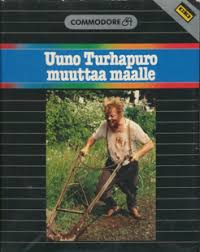
The most celebrated Finnish game of the 8-bit era was Uuno Turhapuro Muuttaa Maalle (1986) for the Commodore 64 — a game based on the beloved Finnish comedy film character Uuno Turhapuro, developed by Finnish studio Amersoft. The game’s combination of Finnish humour, local cultural references, and competent C64 programming made it one of the best-selling Finnish games of the decade. Amersoft was Finland’s most significant 8-bit game publisher, producing Finnish-language games for domestic audiences that international publishers ignored. Their catalogue — spanning the Commodore 64, MSX, and other platforms — represents a uniquely Finnish approach to game development: creating culturally specific games for a domestic market rather than competing directly with international titles.
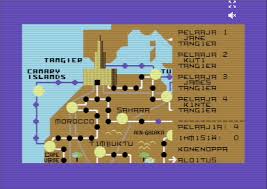
Afrikan Tähti — Finland’s most beloved board game translated to computer format — appeared on multiple platforms in the 1980s, bringing one of Finland’s most recognisable family games to digital form. The combination of familiar gameplay and Finnish cultural identity made computer versions of Afrikan Tähti natural bestsellers in the Finnish market, and the game’s enduring popularity means it has been remade for every subsequent platform generation from the C64 to smartphones. Afrikan Tähti’s continuous presence across four decades of computing platforms makes it the longest-running Finnish game franchise in history.
Other notable Finnish games of the 8-bit era include Seikkailusaari and various Finnish-language adventure games that brought the text adventure format to Finnish audiences. While these games were modest by international standards, they established a tradition of Finnish-language game development that gave domestic players games in their own language — a consideration that mattered enormously in an era when most computer software was in English.
The Demo Scene Connection (1988–1995)

The demo scene — a computer subculture focused on creating audiovisual demonstrations that pushed hardware to its limits — flourished in Finland throughout the late 1980s and 1990s. Finnish demo groups produced legendary demonstrations on Amiga and PC that are still celebrated in computing history. Future Crew’s Second Reality (1993) is widely considered one of the greatest PC demos ever made — a 1.7 MB executable that produced effects so impressive that audiences assumed the hardware was incapable of them. Future Crew’s members went on to found Remedy Entertainment, and the connection between their demo scene mastery and Remedy’s subsequent technical achievements is direct.
The demo scene’s influence on Finnish gaming culture cannot be overstated. It created a community of technically exceptional programmers who valued pushing hardware beyond its apparent limits, collaborated across geographic distances, and shared knowledge freely — values that directly shaped the engineering culture of Finnish game studios. Assembly, the Finnish demo scene party held annually in Helsinki since 1992, became one of the most important gatherings in global demo scene culture and continues today as one of Finland’s largest gaming and technology events. When Remedy, Housemarque, and others were founded in the mid-1990s, they brought demo scene values of technical excellence and creative ambition directly to commercial game development.
Terramarque produced the acclaimed Stardust series — Amiga and PC shooters that combined demo scene technical flair with genuine gameplay quality. Stardust and its sequel Super Stardust were critically celebrated for their smooth gameplay and technical presentation, establishing the Stardust franchise that would eventually become Housemarque’s Super Stardust HD and Super Stardust Delta for PlayStation platforms. Bloodhouse, another Finnish studio of the era, produced Slordax and other PC games before eventually evolving into the company that would become Housemarque.
The Transition Era and First Studios (1992–2000)

Remedy Entertainment (founded 1995 in Espoo) was created by former Future Crew members who applied their demo scene technical mastery to commercial game development. Death Rally (1996) — a top-down racing game with destruction mechanics published by Apogee Software — demonstrated Remedy’s commercial viability, but it was Max Payne (2001) that brought the studio to global attention. Max Payne’s bullet-time slow-motion shooting mechanic, film noir atmosphere, and graphic novel cutscene presentation were all innovations that the industry widely copied, and the game sold over seven million copies. Subsequent Remedy games — Alan Wake, Quantum Break, and Control — have maintained the studio’s reputation for technically ambitious, narrative-driven action games with distinctive visual identities. In a direct and tangible connection to this collection, Remedy borrowed a retro computer from Computer Museum Ata for use as a prop in one of their games, linking Finland’s game development present with its computing heritage.
Housemarque (founded 1995 in Helsinki through the merger of Terramarque and Bloodhouse) continued the Finnish arcade gaming tradition through Super Stardust HD, Resogun, Alienation, and Nex Machina before the critically acclaimed Returnal (2021) brought the studio to the attention of mainstream gaming audiences and earned it Sony’s acquisition. Housemarque’s games consistently demonstrate technical excellence and a commitment to pure gameplay mechanics — twin-stick shooters and bullet hell games that reward skill and mastery — reflecting the studio’s demo scene heritage and its belief that gameplay fundamentals matter more than cinematic presentation.
10tons, founded in 2003 in Tampere, has produced a prolific catalogue of twin-stick shooters and arcade games for PC and console platforms, maintaining the Finnish tradition of technically polished arcade gameplay. RedLynx (founded 2000) created the Trials series — physics-based motorcycle games that achieved enormous commercial success on Xbox Live Arcade and subsequent platforms, demonstrating that Finnish game design could find global audiences through digital distribution.
The Mobile Revolution — Angry Birds and Beyond
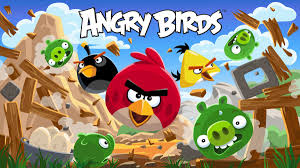
Rovio Entertainment had been producing mobile games since 2003, struggling through 51 games without a breakout hit, before Angry Birds (2009) transformed the company into a global phenomenon. The game’s physics-based gameplay, instantly recognisable characters, and free-to-play accessibility on iOS made it the defining mobile game of the smartphone era’s first decade, with over four billion downloads. Angry Birds demonstrated that Finnish game design could reach billions of players through the smartphone platform that Nokia’s mobile computing heritage had helped create — a poetic connection between Finland’s mobile phone past and its gaming present.
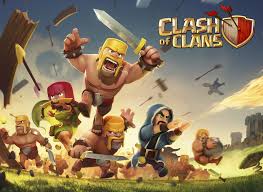
Rovio’s success inspired a wave of Finnish mobile game startups. Supercell (founded 2010 in Helsinki) applied rigorous quality standards to free-to-play mobile gaming with Clash of Clans (2012) and Clash Royale (2016), becoming one of the most profitable games companies per employee in history. Supercell’s team structure — small, autonomous cells with full authority to cancel games that don’t meet quality standards — reflects Finnish engineering culture’s emphasis on quality over quantity. The company cancelled more games than it released, and the games that survived this process became billion-dollar franchises. Small Giant Games (acquired by Zynga), Next Games, and dozens of other Finnish mobile studios followed in Rovio and Supercell’s wake, making Helsinki one of the world’s most concentrated mobile game development hubs.
Finnish Games in This Collection
This collection includes Finnish games across multiple platforms — from Commodore 64 titles by Amersoft through MSX and Spectravideo software to more recent releases. The Spectravideo software collection has particular personal significance: the SV-318 was curator Ari Tommiska’s first computer in 1983, and Spectravideo games represent the very beginning of a lifelong passion for gaming that eventually produced Finland’s largest private retro computer collection. The C64 Finnish game library, the MSX titles produced for the Finnish market, and the Salora Fellow software represent the full breadth of domestic Finnish game development in the home computer era.
Finnish games preserved here are not merely historical artefacts — they are evidence of a national game-making culture whose roots stretch back to 1979 and whose influence on global gaming continues to grow with every new release from studios whose founders learned to code on the machines in this collection. From Chesmac on a Telmac 1800 to Remedy’s Alan Wake 2, from Afrikan Tähti on a Commodore 64 to Clash of Clans on a smartphone, the thread connecting Finnish gaming’s past and present runs directly through the hardware and software preserved here.
The Legacy
Finland’s gaming story is, at its core, a story about what happens when engineering culture, creative ambition, and a small but passionate community of enthusiasts combine over several decades. The bedroom programmers of the 1980s became the demo scene veterans of the early 1990s; the demo scene veterans became the studio founders of the mid-1990s; the studio founders created the global franchises of the 2000s and 2010s. At each stage, the technical values and collaborative culture of the previous generation were passed forward.
The retro computers, consoles, and games preserved in this collection are the physical foundation of that story. They are the tools with which Finland’s game developers learned their craft, the platforms for which Finland’s first games were written, and the cultural artefacts that connect the global gaming industry of today with the Finnish bedroom programmers of the early 1980s who started it all. Chesmac was written on a Telmac 1800 that you can see in this collection. The story began here.