
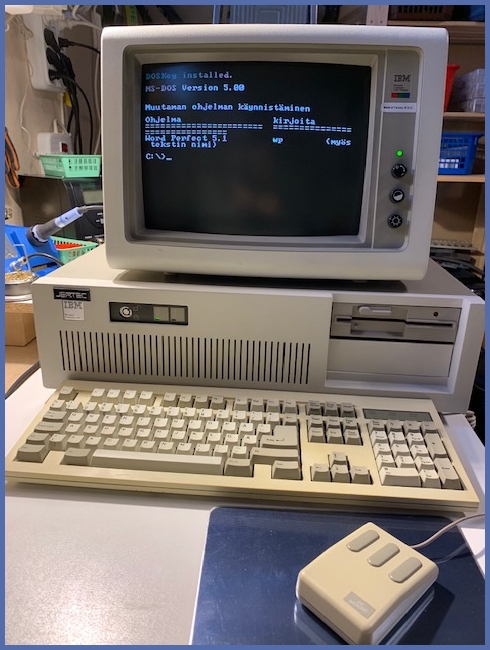
type computer
country USA
year 1984
os PC DOS3.0
cpu Intel 80286
speed 6/8 MHz
ram 512 KB
disk 5,1/4″ 1,2 MB
hd 20 MB
graphic CGA, MDA, EGA, PGA
colors CGA 16, monochrome
sound beeper
ports CGA, serial, parallel, keyboard
The IBM PC AT 5170 — Advanced Technology Arrives
Released in August 1984, the IBM PC AT (Advanced Technology, model 5170) was the most significant upgrade to the IBM PC platform since the original 5150 — introducing the Intel 80286 processor, a 16-bit ISA bus, a 1.2 MB high-density floppy drive, and a real-time clock with battery backup. At 6 MHz initially (later 8 MHz), the 286 processor delivered dramatically better performance than the 8088 of the PC and XT, and its protected mode memory addressing could theoretically access up to 16 MB of RAM — an architectural advance that would eventually support multitasking operating systems.
The 286 Architecture
The Intel 80286 represented a genuine architectural advance over the 8088. Its protected mode allowed multiple programs to run in separate memory areas, protecting each from the others — a prerequisite for proper multitasking. Microsoft’s DOS could not use protected mode, but IBM’s own OS/2 (developed jointly with Microsoft) and Xenix could. The AT’s performance in real mode — running standard DOS software — was also substantially better than the XT, making it immediately attractive to business users running demanding applications.
The AT Standard
The IBM PC AT established the ”AT-class” standard that defined PC-compatible hardware for the remainder of the 1980s. The AT’s ISA bus — expanded to 16 bits from the XT’s 8 bits — became the standard expansion bus, and the AT’s keyboard connector, CMOS battery, and real-time clock became standard features of PC-compatible hardware. The AT standard’s influence persisted well into the 1990s — ISA slots appeared in PC motherboards until the late 1990s, nearly 15 years after the AT’s introduction.