
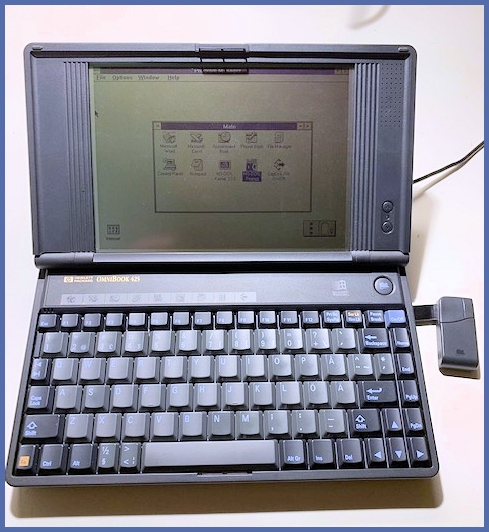
I have the main unit.
type computer
country USA
year 1984
os MS-DOS 5.0 & Windows 3.1
cpu Cyrix 486SLC/e
speed 25 MHz
ram 2 MB
graphic 640 x 480 monochrome STN
colors 16 grey scales
sound pc beeper
ports RS232, PCMCIA 2.0 type 2.0 (4), infrared, parallel
The HP OmniBook 425 — The Instant-On Laptop
The Hewlett-Packard OmniBook series was HP’s line of ultralight laptop computers produced throughout the 1990s, designed to offer genuine portability without the weight and bulk of conventional laptops. The OmniBook 425 used a low-power processor and solid-state storage to deliver exceptional battery life and near-instant startup — a combination of features that targeted the mobile professional who needed a reliable, long-lasting portable computer for travel and field use rather than a full-featured workstation replacement.
HP’s Laptop Heritage
Hewlett-Packard had been a pioneer in portable computing since the HP-75C handheld computer of 1982, and the company brought its engineering precision and quality standards to the laptop market. The OmniBook series represented HP’s consumer and professional laptop offerings in the mid-1990s, positioned between the calculator-heritage handhelds and the full-sized workstation-class HP computers. The series was known for thoughtful engineering details — particularly the pop-up mouse that emerged from the side of early OmniBook models, eliminating the need for an external mouse or difficult-to-use trackball.
Instant-On Computing
A key selling point of the OmniBook series was instant startup — by storing the operating system and applications in ROM rather than on a hard drive, the OmniBook could be ready to use in seconds rather than the minute or more required to boot a conventional laptop from disk. This feature was particularly valuable for users who needed to quickly capture notes or access information in meetings and on the road, anticipating the instant-on capability that modern devices take for granted.