
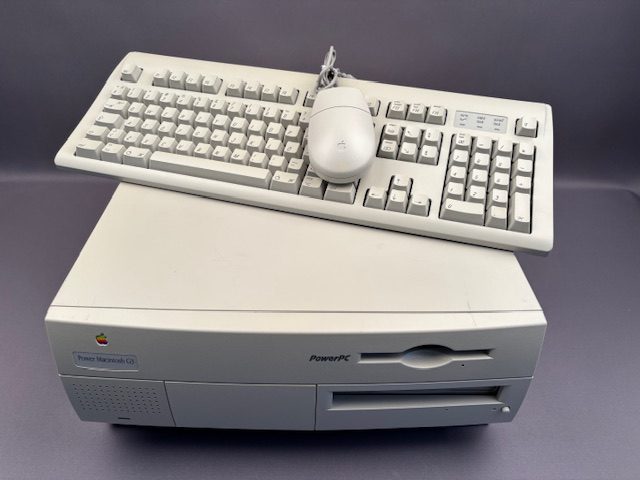
I have the main unit.
type computer
country USA
year 1997
os MacOS 8.0
cpu PowerPC 750 (G3)
speed 233 MHz
ram 32 MB
disk 3,5″ 1.44 MB
cd 24xCR-ROM
hd yes
graphic 3D Rage II+1024×768
colors yes
sound yes
ports Monitor, ADB, SCSI, Serial (4), Sound in/out
The Apple Power Macintosh G3/233 — The G3 Revolution
Released in November 1997, the Power Macintosh G3 represented a major generational leap in Mac performance. The PowerPC G3 processor, developed by Motorola, delivered dramatically better performance than the PowerPC 604e it replaced — in many benchmarks, the 233 MHz G3 matched or exceeded workstations running at 300 MHz or faster using the previous architecture. This was achieved primarily through the G3’s large on-chip level-2 backside cache running at half processor speed, which dramatically reduced memory latency for the common workloads of creative professional applications.
The Backside Cache Advantage
The key to the G3’s extraordinary performance per MHz was its backside cache architecture. Where the PowerPC 604e used a slower system bus for its level-2 cache, the G3’s cache ran at half the processor speed on a dedicated backside bus — for a 233 MHz G3, that meant 116 MHz cache access rather than the 50-60 MHz of the 604e. For applications that fitted in the 512 KB cache — which included most of the professional creative applications Apple’s customers used — this delivered cache hit rates and effective memory bandwidth that far exceeded what clock speed alone would suggest.
Beating Intel
Apple used the G3’s performance advantage aggressively in marketing, running advertisements comparing the PowerPC G3 favourably to Intel’s Pentium II. Independent benchmarks confirmed that for many professional applications — particularly those used by Apple’s core creative professional audience — the G3 delivered exceptional performance per MHz that Intel’s processors could not match. The G3 restored Apple’s competitive position in the high-performance workstation market after years of falling behind Intel’s pace of development.