
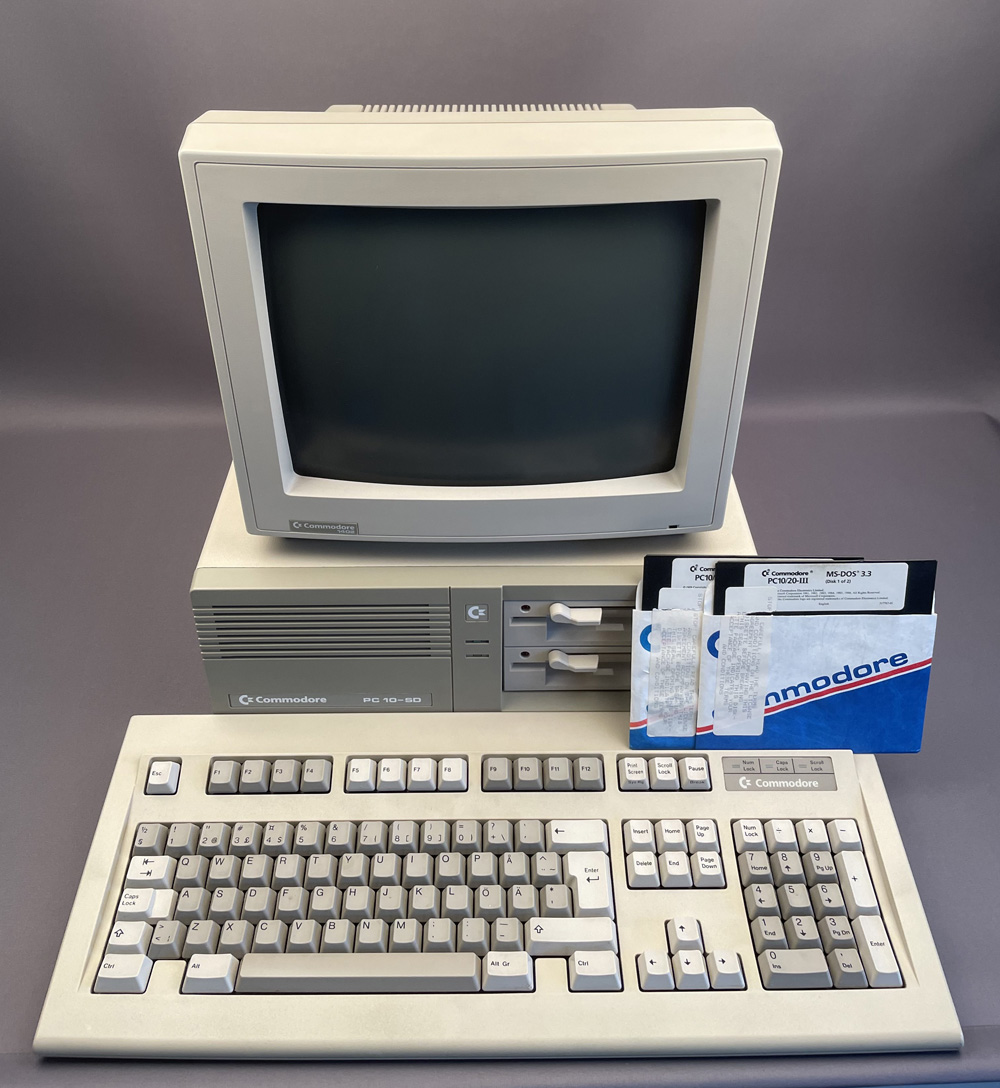
I have the main unit, monitor 1402 and keyboard.
type computer
country USA
year 1985
os DOS 3.3
cpu Intel 8088
speed 4.77 MHz
ram 640 KB
disk 2 x 5,25″ 360 KB floppy disks
graphic ATI Graphics CGA/Monochrome
colors yes
sound peeper
ports 4xISA, serial, parallel, keyboard, composite video out
The Commodore PC 10-SD — Commodore’s Budget PC Clone
The Commodore PC 10 was part of Commodore’s range of IBM PC-compatible desktop computers produced from the mid-1980s onward. Using an Intel 8088 processor — the same chip as the original IBM PC — the PC 10 offered full XT-compatible performance at a price point that undercut IBM’s own machines significantly. The ”SD” designation indicated single disk drive configuration. These machines were sold primarily in Europe, where Commodore had strong brand recognition from the C64 and VIC-20, and targeted small businesses and home users who needed PC compatibility.
Commodore’s PC Market Entry
Commodore entered the PC-compatible market in 1984, recognising that the IBM PC’s growing dominance in business computing represented both a threat to their proprietary platforms and an opportunity for additional revenue. Commodore’s manufacturing efficiency and existing European distribution network allowed them to offer competitively priced clones that captured market share from more expensive competitors. The PC 10 series was among the most affordable XT-compatible machines available in Europe in the mid-1980s.
The XT Standard
The IBM PC XT standard — with its 8088 processor, 640 KB RAM limit, and ISA expansion bus — was the dominant business computing platform of the mid-1980s. Running MS-DOS, the PC 10 provided access to the enormous and growing library of DOS business software including Lotus 1-2-3, WordPerfect, and dBASE III — applications that were becoming essential in business environments worldwide. For users who needed this software compatibility, the PC 10 offered it at Commodore’s characteristically aggressive prices.