
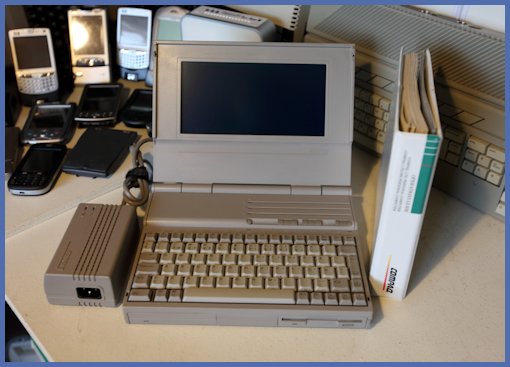
I have the main unit and power adapter.
type computer
country USA
year 1989
os MS DOS 3.31 (Compaq)
cpu Intel 80C286
speed 12 MHz
ram 640 KB
rom 32 KB
disk 3,5″ FDD 1.44 MB
hd 40 MB
display monochrome backlight grayscale CGA 640×200
colors 4 shades of gray
sound beeper
modem internal 2400 bps
ports serial, paraller, CGA monitor, externel port, numeric keypad, power
The Compaq LTE/286 — One of the First True Laptops
Released in 1989, the Compaq LTE/286 was one of the first computers that could genuinely be called a laptop in the modern sense — a battery-powered, clamshell-design machine light and compact enough for genuine lap use. Using an Intel 80286 processor at 12 MHz with 640 KB of RAM, a built-in 3.5-inch floppy drive, an optional 20 or 30 MB hard drive, and a backlit LCD display, it offered full IBM PC-AT compatibility in a 3.2 kg package that ran on battery power for up to two to three hours. The original LTE (launched 1988) was among the very first laptop computers; the LTE/286 updated it with the faster 286 processor.
The Laptop Revolution
The Compaq LTE and LTE/286 arrived at the precise moment when portable computing was transitioning from ”luggable” machines that required a desk and mains power to genuine laptops that could be used anywhere. The combination of a 286 processor (providing genuine business performance), a hard drive (enabling a complete software installation without floppy management), and battery power (enabling use away from power sockets) created a machine that was practically useful in ways the earlier luggables were not. Compaq’s build quality and IBM compatibility gave the LTE/286 credibility with corporate buyers who needed reliability.
3.5-inch Drive — Forward Thinking
The LTE/286’s built-in 3.5-inch floppy drive was a forward-thinking choice that reflected the format’s growing adoption. While 5.25-inch drives remained common in desktop machines, the sturdier and more compact 3.5-inch format was ideally suited to portable use, and Compaq’s early adoption of it in the LTE series helped accelerate the format’s eventual triumph as the universal floppy standard.