
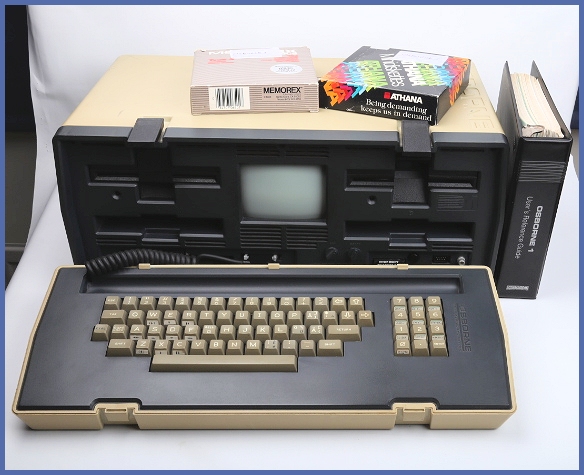
type computer
country USA
year 1981
os CP/M 2.2
cpu Zilog Z80
speed 4 MHz
ram 512 KB
disk 2 x 5,25″ FDD
graphic build-in 5″
colors monocrome
sound beeper
ports RS232, IEEE488, modem, composite video
The Osborne 1 — The World’s First Commercial Portable Computer
Released in April 1981, the Osborne 1 was the world’s first commercially successful portable computer — a self-contained, transportable machine that combined a Z80 processor, 64 KB of RAM, two 5.25-inch floppy drives, a 5-inch built-in CRT display, and a comprehensive software bundle in a single sewing machine-sized unit weighing 10.7 kg. Designed by Adam Osborne — a British-born technology writer and publisher who had written one of the first books on microprocessors — and developed with engineer Lee Felsenstein, the Osborne 1 sold 10,000 units in its first eight months and reached sales of 10,000 units per month by 1982.
The Software Bundle Revolution
The Osborne 1’s most commercially significant innovation was not its portability but its software bundle. At $1,795, it included WordStar word processor, SuperCalc spreadsheet, dBASE II database, and two versions of BASIC — software that would have cost $1,500 or more purchased separately. This ”bundled software” strategy was genuinely revolutionary — Osborne recognised that buyers wanted a complete, working system rather than having to source software separately. The bundle strategy was widely imitated by Kaypro and other competitors, and eventually influenced the consumer PC bundling approach that IBM and others would adopt throughout the 1990s.
The Osborne Effect
The Osborne 1’s legacy includes an inadvertent contribution to business vocabulary: the ”Osborne effect.” In 1983, Adam Osborne prematurely announced future Osborne computers before they were available — causing customers to cancel orders for the existing Osborne 1 while waiting for the superior machines. Sales collapsed, Osborne Computer Corporation declared bankruptcy, and the ”Osborne effect” entered business literature as a cautionary tale about premature product announcements. The machine that pioneered portable computing thus also pioneered one of the most cited examples of marketing self-destruction.