

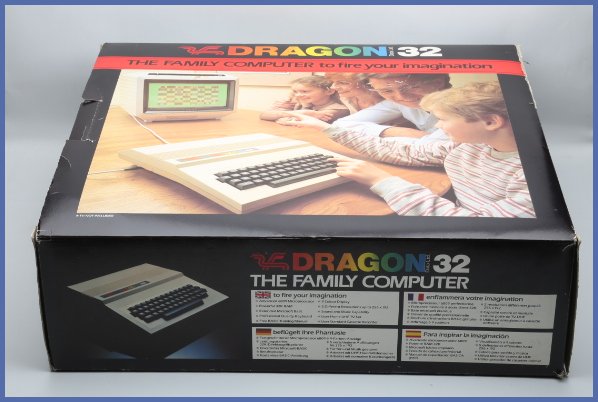
I have two Dragon 32 (one CIB), Dragon 64 and Finlux Dragon 32 main units, Dragon Double 5,1/4″ Disc Drive, Dragon Disc Controller, three power adapters and five joysticks.
type computer
country England
year 1982
os Microsoft extended basic
cpu Motorola MC6809ep
speed 0,9 MHz
ram 32 KB (D32) / 64 KB (D64)
rom 16 KB
graphic 256×192 (2)
colors 8
sound 1 voice, 5 octaves
ports RF, two analogue joysticks port, centronics, cartridge, composite video
The Dragon 32/64 and Finlux — The Welsh Home Computer
The Dragon 32 and Dragon 64 were home computers manufactured by Dragon Data Ltd of Port Talbot, Wales, released in 1982 and 1983 respectively. Using the Motorola 6809 processor — a more sophisticated 8-bit chip than the 6502 or Z80 used by most competitors — the Dragon computers were closely related to the Tandy TRS-80 Color Computer (CoCo) produced in the USA, sharing the same Motorola MC6883/6847 chipset. The Dragon was one of the few home computers produced in Wales and represented a significant attempt by a British regional manufacturer to compete in the increasingly crowded home computer market.
The Motorola 6809 Advantage
The Motorola 6809 was one of the most elegant 8-bit processors ever designed — significantly more capable than the 6502 or Z80 in terms of addressing modes, register organisation, and programming model. Its architecture made it an excellent target for structured programming languages, and several versions of Pascal, C, and even a subset of Forth ran effectively on 6809-based machines. The Dragon’s 6809 gave it a software development environment that was genuinely superior to many competitors, though this advantage meant little to the gaming market that drove home computer sales.
The Finlux Connection
The Finlux brand in the collection’s title is particularly interesting — Finlux was a Finnish electronics brand (owned by Salora, the Finnish company that also produced the Salora Fellow computer). Finlux marketed the Dragon in Finland, where it was sold under the Finlux name. This Finnish connection makes the Dragon/Finlux an especially appropriate addition to the Computer Museum Ata collection, representing the localised distribution of British home computers in the Nordic market.
Dragon’s Brief Life
Dragon Data went into receivership in 1984, just two years after launching. The company was a victim of the intensely competitive home computer market — unable to match the marketing muscle of Sinclair and Commodore or the price aggression of the Asian clone manufacturers. The Dragon’s technical quality was not in question; its commercial infrastructure simply could not sustain it. Surviving Dragon computers are today valued collectors’ items, particularly in Wales where they represent a piece of local industrial and technological heritage.